Product Highlights
BEAMSCAN
Water Phantoms
VERIQA
Patient QA Platform
UNICHECK
Web-based Daily QA
RUBY
Modular QA Phantoms
BEAMSCAN MR
Water Phantom for MRgRT
OCTAVIUS 4D / 4D MR
QA Phantom
Electron Density Phantom
Classical Shape Phantom
Track-it
QA Data Management Platform
flashDiamond
Detector
UNIDOS Tango & Romeo
Reference Class Electrometers
All Radiation Therapy Products
A B C
D
E F
G
H
I
J
K
L
M
N
O P Q R S T U V W
X
Y
Z
Product Highlights
NOMEX
Multimeter
NOMEX
Dosemeter
Track-it
QA Data Management Platform
QRM
Phantoms
All Diagnostic Imaging Products
A B C
D
E
F
G
H
I
J
K
L M N
O
P
Q
R S T U
V
W
X
Y
Z

Interview with Jürgen Kiehne

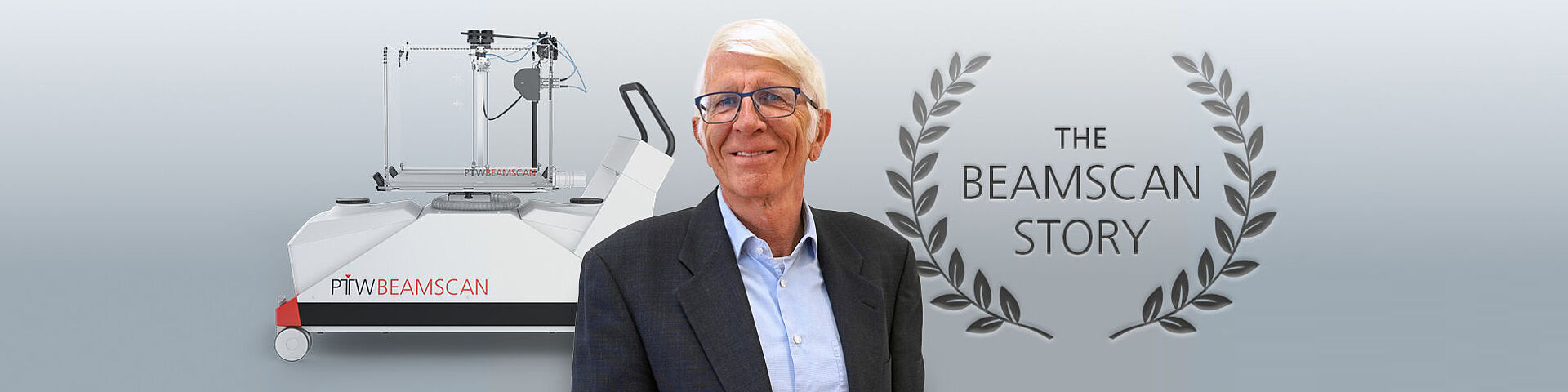
The BEAMSCAN Story: "We wanted to rethink the water phantom from the ground up"

What makes a good water phantom? How much automation is useful? And how do you develop a medical device that is not only technically precise, but also easier to use in everyday practice?

To mark BEAMSCAN’s 10th anniversary, Jürgen Kiehne looks back at the development of the water phantom. As the Product Manager responsible for the project, he accompanied it from the initial idea to well beyond the market launch. After more than four decades at PTW, he is now retired. But he immediately agreed to revisit the BEAMSCAN story for our interview: the original idea, the many challenges large and small, and BEAMSCAN’s evolution into today’s product family.

BEAMSCAN was launched ten years ago. Why was a new water phantom needed at the time?

Jürgen Kiehne: Our MP3 system was still selling well, but it was getting on in years. We knew we needed something new, and not simply "old wine in new bottles".

We wanted to develop a system unlike anything that already existed. This applied not only to functionality and usability, but also to the product design. To achieve that, we had to rethink the principle of the water phantom from the ground up.

With BEAMSCAN, our aim was to approach many things differently, and that meant breaking new ground in many areas, not only in development, but also in product design, manufacturing and production.

At the start of the development process, you spent a great deal of time observing users. What did you learn?

Jürgen Kiehne: I visited customers with colleagues. But I did not simply want to ask what they liked or disliked about their existing systems. We wanted to observe the entire workflow.

A water phantom is not already waiting in the treatment room. It is usually kept in storage, where space is often limited. It has to be maneuvered out, moved through corridors, set up, aligned and filled with water. By the time the medical physicist could actually start measuring, an hour could easily have passed. And the work was not over after the measurement: the water had to be drained, the system dismantled and returned to storage. That also took time.

Time is an important factor in radiation therapy. These measurements are often performed outside patient treatment hours. For a medical physicist, an extra hour of setup usually means an extra hour in the evening or at the weekend. We listened, helped with the work and took notes. It soon became clear that there was a great deal to incorporate into the product requirements.
 

One consequence was the integrated design. What was the idea behind it?

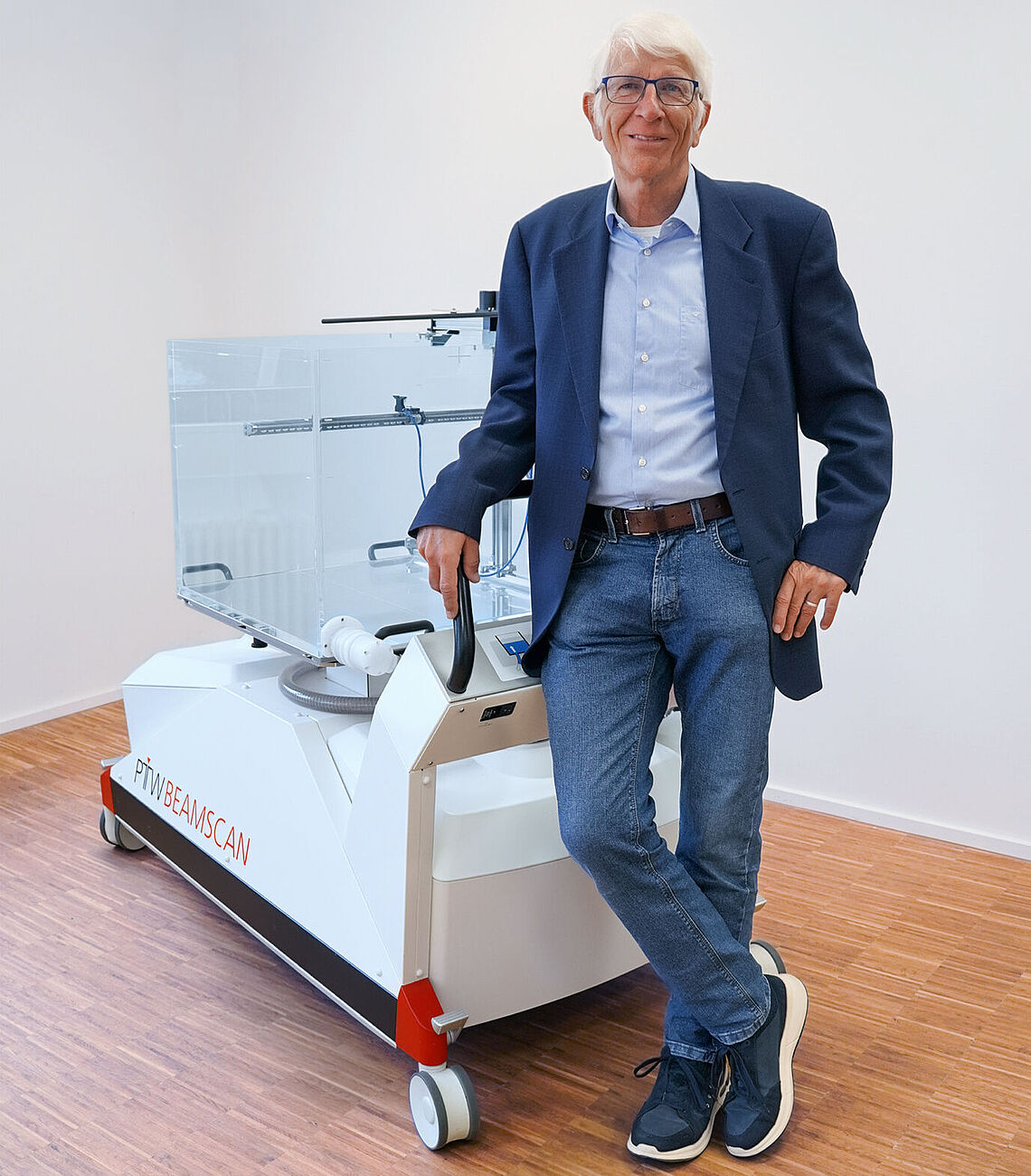
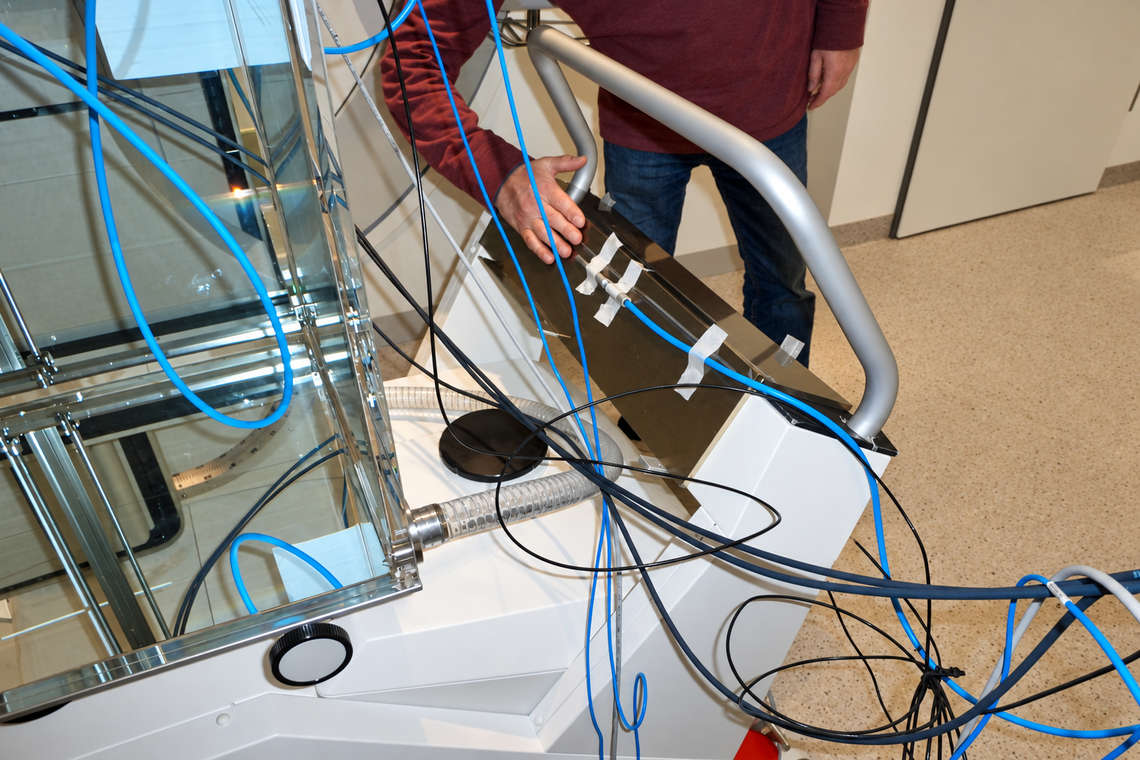
Jürgen Kiehne: We wanted to move away from the many separate devices and cables that had to be handled and connected when setting up a water phantom. That is why we integrated the electronics directly into the water phantom. The integrated design makes the system much more streamlined.

At the time, however, it also introduced new technical challenges: the electronics were now close to the central beam, so we had to examine scatter radiation and the necessary shielding in depth. To understand the effects better, we took our systems to customer sites and used numerous ionization chambers and measurement systems to take readings at different points on the water phantom.

These measurements allowed us to calculate the required shielding materials and thicknesses. It involved a great deal of development work that is no longer visible in the finished product.


Another focus was positioning accuracy. Why was that so important?

Jürgen Kiehne: From conversations with customers, we knew that positioning accuracy in existing water phantoms was not always optimal in some of the outer measurement areas because of the moving mechanism. At the same time, treatment techniques and treatment planning systems were becoming increasingly precise. The measurements therefore had to become more precise as well. This had a particular impact on the manufacturing, assembly and testing processes for the moving mechanism, ultimately making BEAMSCAN a project for the entire company.

At first, we still checked the positions in production using a manual measuring arm. An employee had to move to every individual measurement position, readjust if there was any deviation, and then start all over again. By the end of the day, his arm could be pretty tired ... So we decided to use a laser scanner. It was a major investment at the time, but it automated the inspection process while delivering the required measurement accuracy.
 

 One of BEAMSCAN’s key innovations is automatic leveling. How does the principle work?

Jürgen Kiehne: With the previous system, after positioning the phantom, the medical physicist first had to align it with the room lasers and then level it mechanically. Adjusting one control wheel could affect another setting.

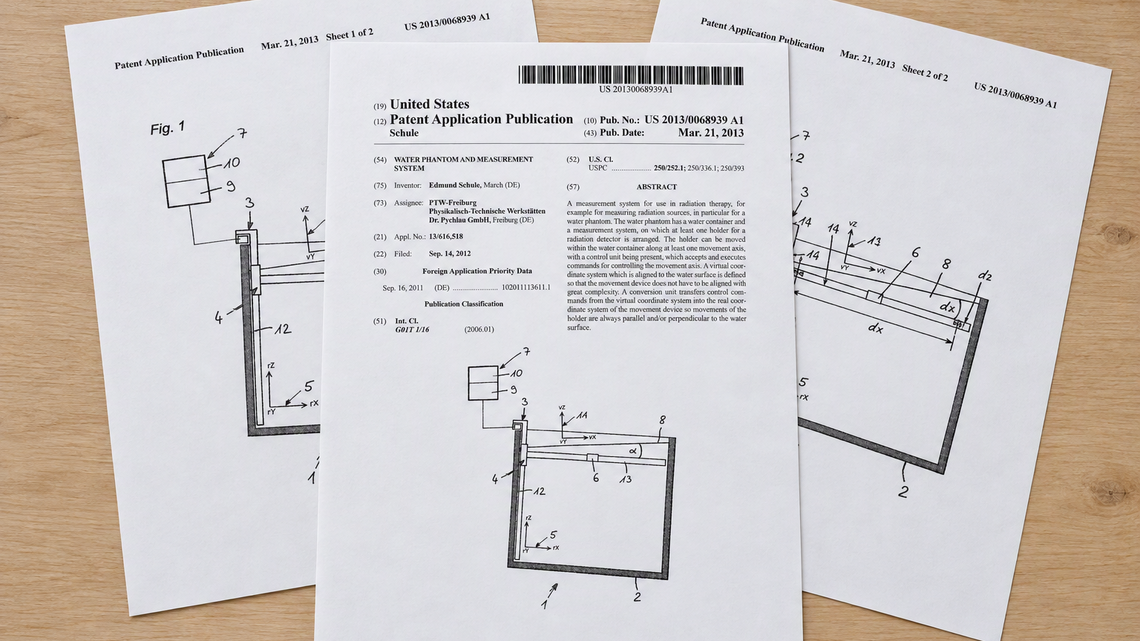
So we developed an automated process: we measure the water surface and use the data to calculate its tilt mathematically.

The moving mechanism then moves in three axes aligned with the water surface. The decisive advantage is that the calculation is reproducible and does not require a mechanical gear system whose backlash could affect accuracy. For us, this was a crucial development step. The solution was also patented. Today, TRULEVEL is incorporated throughout the entire BEAMSCAN family.


But the automation is not limited to leveling, is it?

Jürgen Kiehne: No. We wanted to make the entire setup as simple as possible and even brought in an external UI designer. It was important to us that operation was not only technically reliable, but also intuitive. With the wireless handheld pendant, users can complete the individual steps one after another without having to remember the sequence. They start the procedure and are guided through the process.

What was the idea behind the wireless handheld pendant?

Jürgen Kiehne: The old system had a handheld pendant with a coiled cable. The medical physicist had to move around the phantom with it, and sometimes the cable was too short or became tangled with other cables. So we came up with the idea of a wireless pendant. But that immediately raised a whole series of new questions: Which device should we use? How should the connection work? Would we need a Wi-Fi access point? In the end, we chose a widely used device at the time: an iPod.

The real challenge, however, was integrating it into the overall system and meeting the different requirements and regulatory approvals around the world. That was typical of the entire BEAMSCAN project: what seemed like a small improvement quickly turned into a development project of its own.


It is not one single innovation that defines BEAMSCAN, but the determination with which we solved many of the users’ problems, large and small.
Jürgen Kiehne, former Product Manager for BEAMSCAN

How did users respond to the automated functions?

Jürgen Kiehne: There was initially a certain degree of scepticism, which I can understand. If I am a medical physicist and I press a button, and the machine then tells me, “Everything is now set up correctly,” I have to trust that statement. In radiation therapy, that carries a particular responsibility. That is why we verified the automatic leveling very thoroughly and carried out numerous measurements at customer sites.

At first, there was even a manual adjustment mechanism for users who wanted to set up the water phantom in the way they were used to. But once customers saw how reproducibly the automatic adjustment worked, there was little demand for this option.


You also automated the filling of the water phantom. Why?

Jürgen Kiehne: Because this was another typical issue from everyday practice. With the previous system, the medical physicist had to stay beside the phantom while it was filling and switch off the pump at the right moment. If you were distracted at the wrong moment, the water could overflow. It happened to me when I was called out of the room for a moment, and suddenly I heard water splashing ... There had to be a better way. That is why we integrated a water sensor. It stops the water supply at a reproducible fill level. It may sound like a small detail, but details like these determine how useful a system is in everyday practice.
 

BEAMSCAN was not only rethought technically; the packaging was also part of the concept. Why was that important?

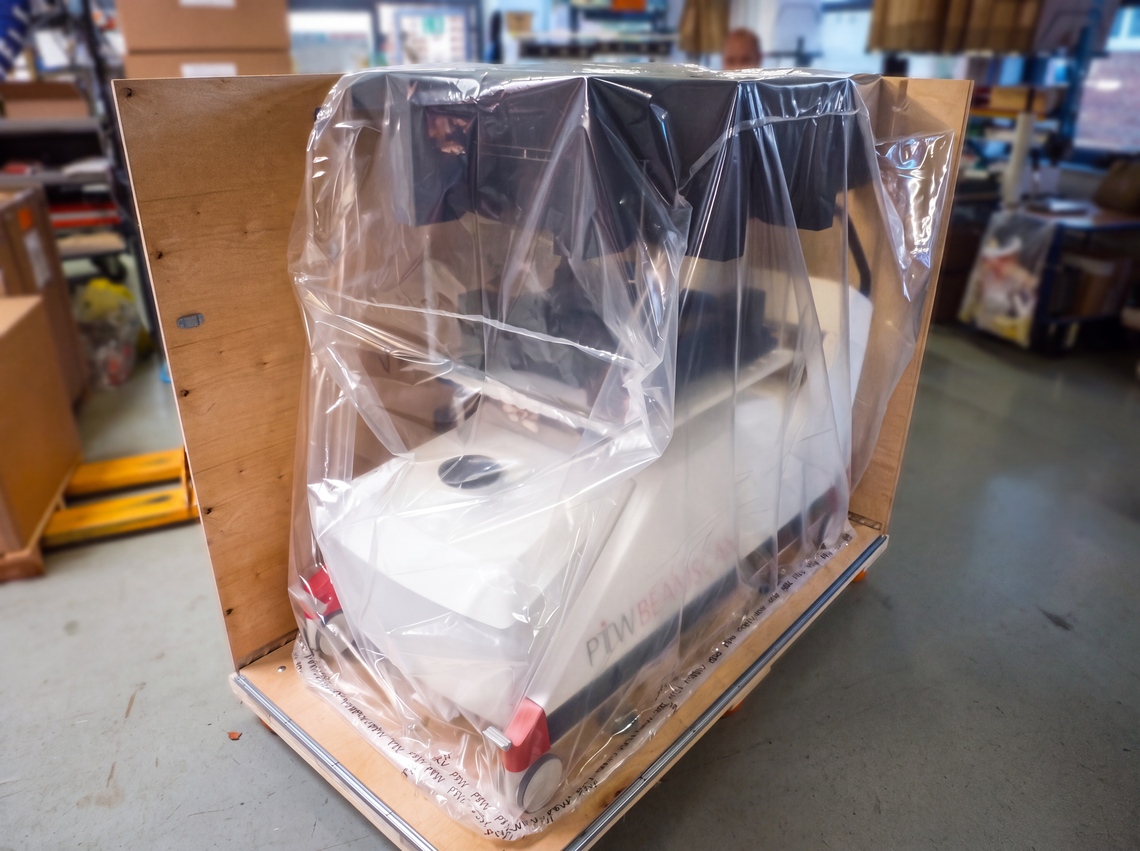
Jürgen Kiehne: In the past, water phantoms arrived at the customer site in several crates and boxes. Everything then had to be assembled. Even the axes of the moving mechanism had to be installed and aligned by the customer. This took time and created the potential for assembly errors.

So we wanted an all-in-one-box solution. The customer receives one large crate: open the lid, lower the ramp, roll the system off the pallet, remove the transport lock, and it is ready to go. Even the cables between the electronics and the water tank were already connected. Essentially, all the user had to do was insert the detectors and fill the tank with water. This significantly reduced the time from unpacking to being ready to measure.
 

How do you test whether a design like this will actually withstand transport around the world?

Jürgen Kiehne: Above all, thoroughly! I found a video recorded in our underground car park at the time. It shows a BEAMSCAN secured to its transport pallet being pushed into a concrete pillar with a fair amount of momentum. Of course, the packaging was also officially verified by external service providers in accordance with the relevant standards and transport requirements.

We also attached shock indicators to the crate. After transport, these show whether the BEAMSCAN system has been exposed to an unusually severe impact en route. At the same time, the visible indicators encourage carriers to handle the crate carefully to avoid triggering them.
 

How did people respond when BEAMSCAN was presented for the first time?

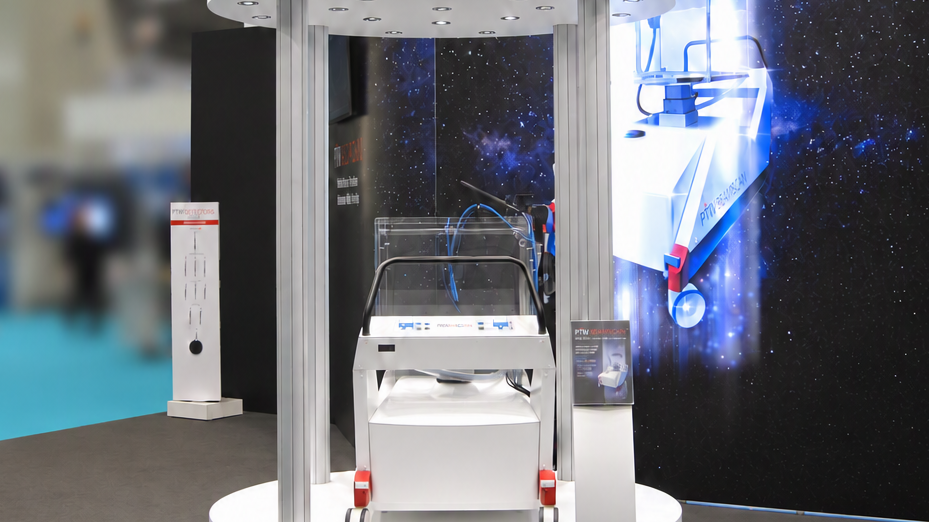
Jürgen Kiehne: We first presented the system at ESTRO in Turin on a rotating platform so visitors could view it from every angle

The competition quickly recognized its potential. One competitor said, in effect, "We’ll have to raise our game now." Naturally, we were pleased to hear that. But more importantly, customers also showed interest very quickly. Some even wanted to place orders, although the market launch was still some time away. We therefore initially installed three prototype systems at customer sites. I travelled there myself, commissioned the systems and trained the users.

These first installations were really important because they allowed us to gain experience from clinical use while there was still time to incorporate it into the final product.
 

Were there also market requirements that you had not anticipated during the original development?

Jürgen Kiehne: Yes. Not long after the market launch, customers approached us and asked whether BEAMSCAN was also suitable for a linear accelerator with a ring gantry. That came as a surprise at first. But it turned out that our automated functions are particularly well suited to this application. Because of the specific geometry and limited accessibility of a ring-gantry linac, BEAMSCAN’s automatic alignment is a major advantage. We developed a solution as quickly as possible and were in the right place at the right time, even though ring-gantry linacs were not yet on the market when BEAMSCAN was originally developed.
 

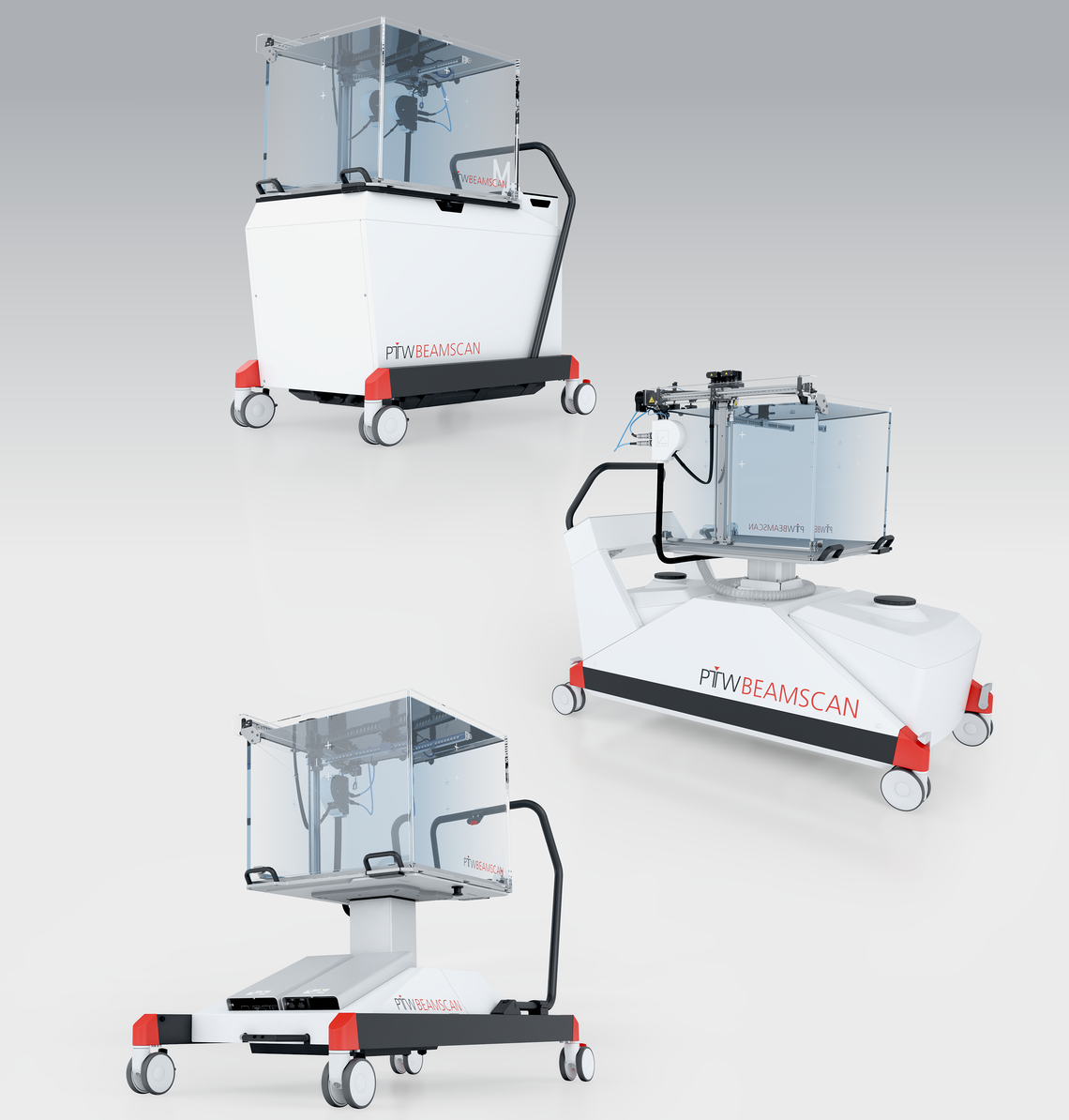
Today, there are several BEAMSCAN models. How did this development come about?

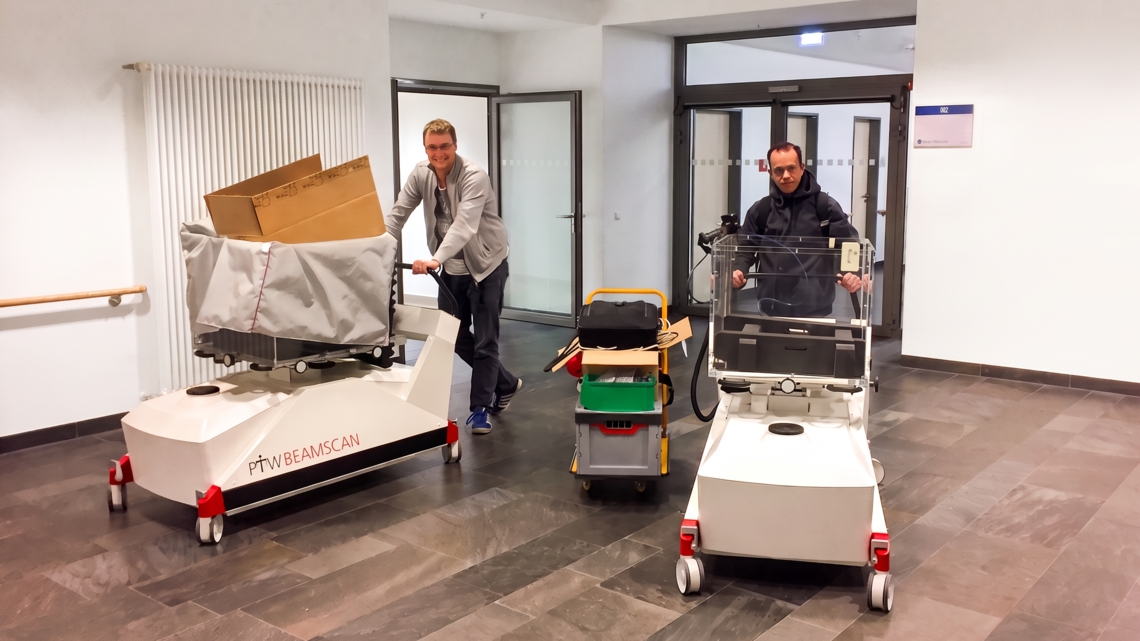
Jürgen Kiehne: Users sometimes have very different requirements. In some countries, for example, medical physics consultants perform measurements for several clinics and need to transport their system from one site to another as easily as possible. The same applies to large hospital networks that operate several accelerators at different sites. For them, sharing a water phantom can make economic sense.

Ring-gantry linacs also have different requirements; for example, no lift carriage is needed. It was therefore a logical step to develop the original concept into a family of different systems: BEAMSCAN Speedo as a particularly fast-to-deploy all-in-one solution, BEAMSCAN Ringo for ring-gantry applications with a compact design, and BEAMSCAN Mobilo for mobile use.

But the underlying principle remains the same: automate as much as possible and minimize the time users need for setup and preparation.
 

What was the greatest personal challenge for you during the development process?

Jürgen Kiehne: Convincing people at different stages of the project. Internally, there were questions about whether it might become too expensive, and the manufacturing team asked, "How are we supposed to achieve this level of accuracy?" 

Sometimes you simply have to persevere and find compromises. If the immediate response to every difficulty is "That can’t be done," there will be no innovation. We kept trying different approaches. One person would run a test, someone else would come up with another idea, and eventually we found a solution.

At the same time, the length of development cycles should not be underestimated. With a complex medical device, weeks or months can pass between an idea and a finished component being available for testing. If the component then fails to work, part of the process starts again from the beginning. Tests such as EMC testing, safety testing and transport verification may also require another design change. Looking back, five years from development to market readiness was therefore not an unusually long period for a completely new product concept involving numerous technical challenges.

How did you position BEAMSCAN when bringing it to market?

Jürgen Kiehne: Price always plays a role, of course. But we did not want to compete on price; we wanted to compete on value. If BEAMSCAN can be set up in twelve minutes for a task that that might take almost an hour with a conventional system, that is not only technically interesting. It saves valuable working and linac time. And that also makes economic sense for the clinic.

When you look back at BEAMSCAN today, ten years after its market launch, what are you most proud of?

Jürgen Kiehne: That we really did succeed in rethinking the water phantom. We did not simply add individual functions. We started with the user and asked ourselves: Where is time being lost? What is complicated? Where can errors occur? And which steps can we automate? This led to many individual innovations: the integrated design, higher measurement accuracy, automatic leveling, wireless control, automated water filling, user guidance, and the transport and commissioning concept.

For me personally, the project was also special because I had already spent many years working on the development of water phantoms. With earlier systems, I had often thought that things could be done even better. With BEAMSCAN, I was finally able to apply that experience. In the end, perhaps it was a combination of experience, the right timing and the right people. And, of course, a project like this also requires a team that is prepared to keep looking for solutions.

Diese Seite existiert auch in Ihrer Sprache.
This page also exists in your language.
Sprache wechseln Change Language